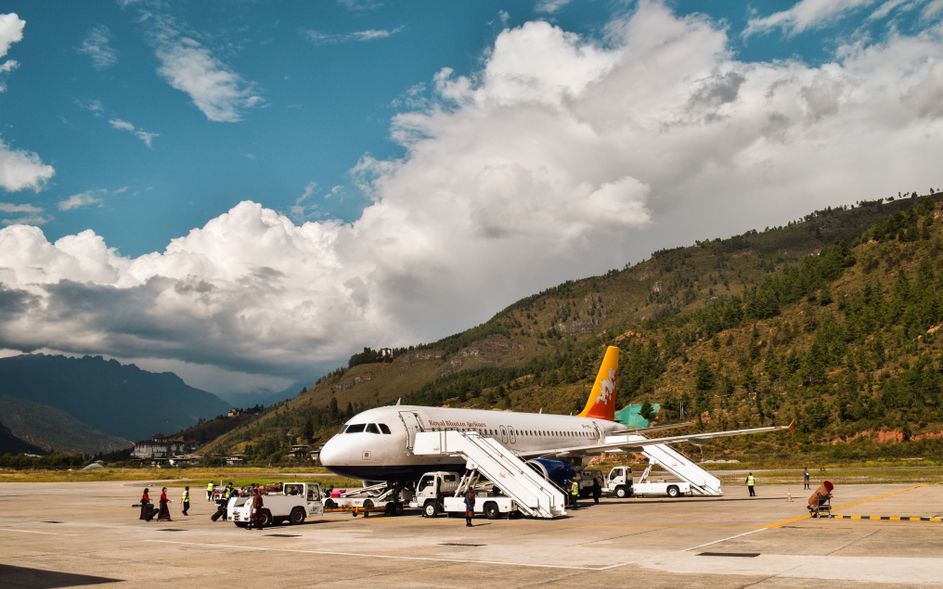
Bhutan’s Paro International Airport (PBH) is frequently featured on lists of the world’s most dangerous airports. Just a small handful of pilots are certified to make the manual by-daylight-only approach between 18,000 feet peaks, through a long, winding valley, and onto a runway that is only 7,431 feet long and visible for only moments before landing. Let’s take a closer look at how it all works.
Manual approach by checkpoint landmarks
Very few pilots are certified to land at Bhutan’s Paro International Airport, and not without reason. Firstly, there is no radar to guide planes into the airport.
As a result of this, the pilot needs to fly entirely in manual mode, according to procedures for landing that have been designed by experienced pilots and aircraft manufacturers. These specify at which speed and altitude the aircraft needs to be at specific visual landmark checkpoints as the pilots make their approach into Paro.